
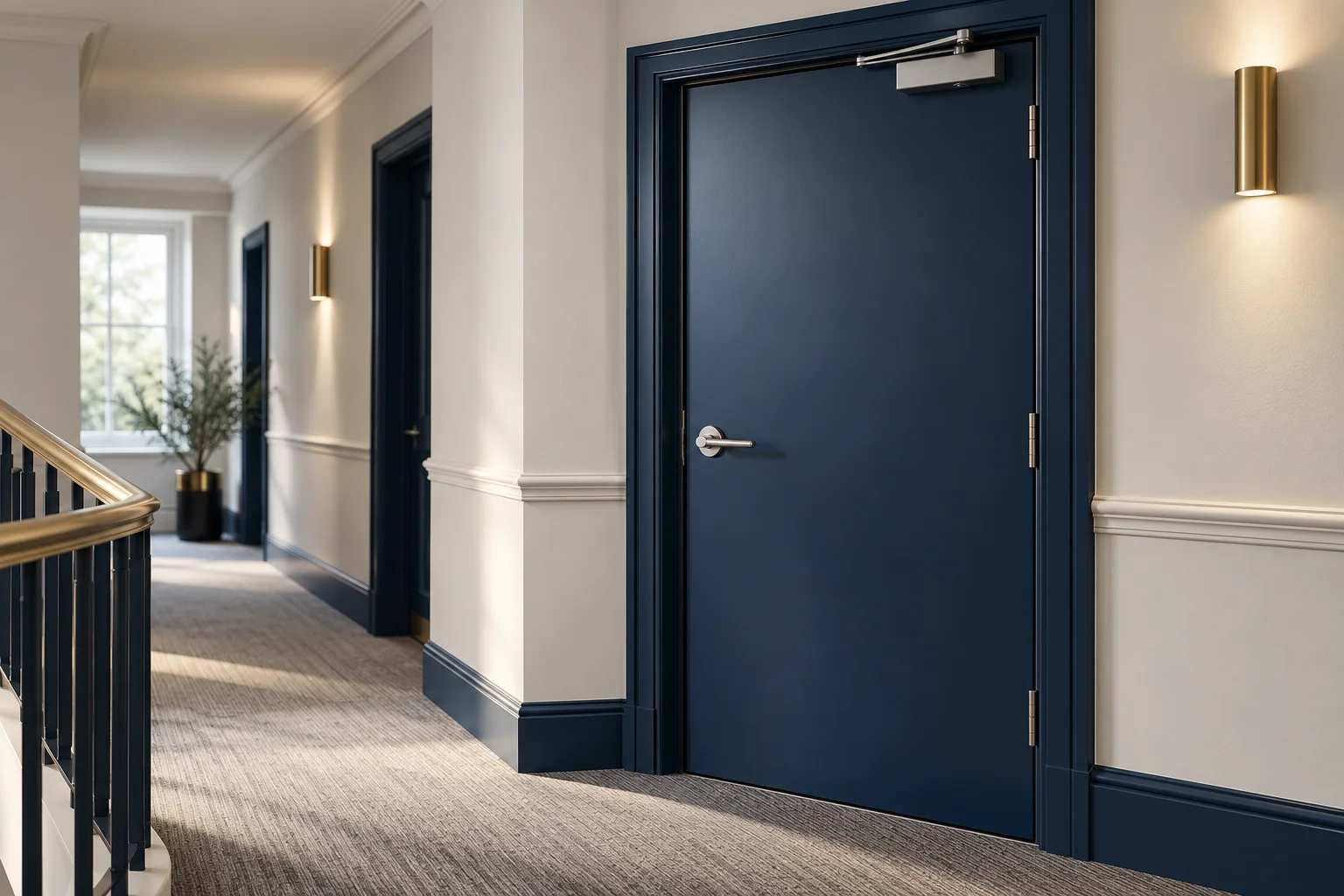
Give every door a usable identity
Descriptions such as “the corridor door” become unreliable when a building has several corridors or when a different contractor attends. Use a consistent identifier that records the property, floor and location. Keep the identifier on the check record and photograph references. A simple location sketch can help without needing a full asset-management system.
Use the appropriate checklist
The government’s accessible fire door checklist includes the door and frame, glazing, ironmongery, gaps, strips and seals where present, self-closing arrangements, alterations and damage. It also provides an action-plan structure. Its associated guidance assumes the FRA has already considered the suitability of the doors. Routine checks should not be presented as a substitute for a competent technical assessment.
Describe the observation, not just a verdict
A note that says “failed” gives the next person very little to work with. Record what was observed and where: for example, which part needs further investigation or which opening movement was affected. Use photographs to support the description, while avoiding unnecessary images of residents or personal information. Do not invent measurements or a fire-resistance rating from appearance alone.
Separate observations from proposed repairs
An issue may require assessment before the correct repair can be specified. Ask the appropriate competent person to explain the solution, materials and evidence needed. Keep the quotation and the completion record against the same door identifier. Avoid making unassessed alterations yourself on the assumption that any new component is automatically an improvement.
Make follow-up straightforward
We recommend recording the person responsible, target date, current position and evidence of completion. Where an FRA finding is difficult to interpret, a focused explanation or a separately scoped door survey can establish the next step. Our books and services provide practical starting points, while building-specific decisions need suitable evidence and competent input.
Guidance and further reading
Sources checked 12 October 2026. This article offers general information; it does not determine the requirements or certify the condition of a particular property.
Discuss your next step
Contact Darren J Young MIFSM for an agreed-scope assessment, review or training enquiry.
Explore the relevant service Contact Darren